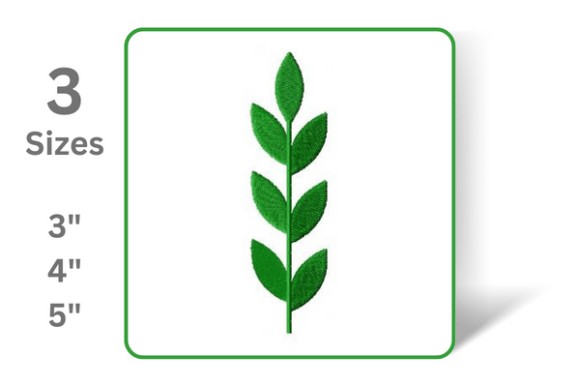
Minimalist Leaves Embroidery Design Review
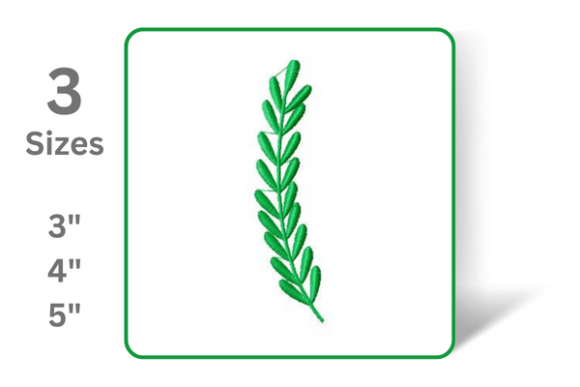
If you have spent any time walking the aisles of a busy weekend craft fair or scrolling through an Etsy shop, you know that first impressions are everything. As an embroidery designer who has stitched thousands of designs for market booths, I look at a digital file and immediately start visualizing it on finished products. Today, I am reviewing Minimalist Leaves, a design from the Single Flowers category. The description promises a wonderful addition to pillows, towels, apparel, and home decor with a colorful look. But does it actually sell? Does it photograph well? And is it practical for batch production?
Here is my honest review of Minimalist Leaves as a potential star in your handmade product line.
First Impressions: Modern Elegance Meets Market Appeal
The title Minimalist Leaves sets a specific expectation: clean lines, negative space, and a modern aesthetic. In a sea of overly complex floral patterns often seen at craft fairs, minimalism stands out because it feels premium and intentional. This design does not shout; it whispers quality. It fits perfectly into the current trend of "quiet luxury" and farmhouse chic that dominates both physical retail spaces and online marketplaces.
When I imagine this design on a booth table, it brings a sense of calm sophistication. It is not just a decoration; it is a statement of style. For the Etsy seller or boutique maker looking to attract customers who value understated elegance, this design hits the right note. It feels versatile enough for a young professional buying a gift and rustic enough for a homemaker looking for kitchen accents.
Product Potential: Where Minimalist Leaves Shines
The versatility of this machine embroidery design is its greatest asset. Let’s break down how it performs on specific craft fair products.
Tote Bags and Market Totes
A tote bag design is often the bread and butter of any handmade vendor. Minimalist Leaves works exceptionally well here. Because the design is likely composed of clean lines rather than dense, heavy fills, it will not weigh down lightweight cotton canvas. When placed on the front pocket of a tote or centered on the main body, it creates a balanced focal point. Customers love seeing something they can use daily, and a minimalist leaf motif pairs effortlessly with almost any outfit color.
Kitchen Towels and Aprons
For the home cook, functionality meets beauty. This tea towel embroidery idea is a strong seller. The design adds a pop of color without overwhelming the utility of the item. On an apron, it serves as a subtle accent near the pocket or chest area. The key here is thread contrast. If you use high-quality threads that complement the fabric color, the design will look crisp and professional, elevating a standard $5 towel to a $15 boutique item.
Pillows and Home Decor
Home decor items allow for larger scale presentations. On a pillow cover, Minimalist Leaves can be enlarged to become a bold graphic element. This is where the "colorful look" mentioned in the description really comes into play. By using multiple thread colors for the leaves, you can create a vibrant yet structured piece that looks expensive. These items sit on shelves and coffee tables, giving buyers ample time to appreciate the detail.
Caps and Patches
Structured items like baseball caps require designs that hold their shape. Minimalist lines tend to work better on curved surfaces than intricate, tiny details. If the design has good spacing, it will embroider cleanly on a cap front. Similarly, for an embroidered patch, the simplicity ensures that the edges remain defined even after being cut and finished. It is a safe, stylish choice for accessories.
Production Practicality and Booth Strategy
As a business owner, I care about efficiency. Can I make ten of these in an afternoon? Does it photograph well for my printable mockup listings?
Batch Production
Simple designs are faster to stitch. If Minimalist Leaves relies on fewer color changes and simpler stitches, your hoop time decreases. This directly impacts your profit margin. Furthermore, simple designs are easier to repeat consistently. You want every single small shop product to look identical. Complex patterns can sometimes shift or distort if the fabric tension varies slightly, but minimalist geometry tends to stay true.
Photography and Online Listings
In the digital age, your customer cannot touch the fabric. They buy what they see in the photo. Minimalist designs photograph beautifully because they do not get lost in shadows or blur when zoomed in. A clean leaf pattern against a neutral background (like cream linen or white cotton) pops in images, making your digital embroidery file listings more clickable. It also makes creating design assets for social media much easier, as the focus remains entirely on the texture and color of the thread.
Technical Considerations and Careful Use Notes
Before you commit to mass production, there are critical technical checks every experienced designer must perform. Do not skip these steps.
- Stitch Density: Check the stitch density of the design. If the leaves are too dense, they may pucker thin fabrics like voile or jersey. If they are too sparse, they may look skimpy on heavier fabrics like denim. Always test on scrap fabric that matches your final product.
- Hoop Size and Placement: Confirm the recommended hoop size. A design that requires a large hoop might limit which tote bags or pillows you can use. Smaller hoops offer more flexibility in product placement.
- Thread Contrast: The success of a minimalist design lies in contrast. Dark green leaves on black fabric may disappear. Light yellow leaves on cream fabric may wash out. Choose thread colors that stand out clearly against your chosen fabric texture.
- Stabilizer Selection: Using the wrong stabilizer can ruin a clean design. For woven fabrics, a tear-away stabilizer is usually best. For knits, you need a cut-away to prevent shifting. Incorrect stabilization leads to puckering, which destroys the "premium" feel.
- Fabric Texture: Be cautious with highly textured fabrics like terry cloth or boucle. Tiny details in the leaf veins may get lost in the weave. Minimalist designs often rely on fine lines; ensure those lines remain visible on your specific material.
Final Verdict for Craft Fair Sellers
Minimalist Leaves is a smart addition to any commercial embroidery library. It appeals to a broad demographic, from the modern millennial to the traditional homemaker. Its strength lies in its adaptability—it works as a small accent on a jewelry pouch or a large statement on a throw pillow.
However, remember that the design is only as good as the execution. Invest in high-quality threads. Ensure your machine is properly calibrated. And always, always produce a real-world sample before listing it as a finished product. There is nothing worse than selling a beautiful concept that looks muddy in person.
If you are looking to add a touch of nature-inspired elegance to your booth that screams quality without shouting, this design is a worthy candidate. Just verify the commercial licensing terms for the embroidery file before you start selling, and check the specific stitch count and format requirements provided by the creator to ensure compatibility with your equipment.
Happy stitching, and may your craft fair sales be evergreen!